Here is a really great product my son found for me. Really useful and easy to use. It enables you to store things you find on the web or even see, so that you can look at them later.
Take a look at www.evernote.com
Thursday, August 14, 2008


Wednesday, August 13, 2008
The Real Golden Rule?
Some people say that the Golden Rule is a value which simply means "treat others as you would like to be treated."
This rule is encased in religious beliefs
Christianity
Matthew 7:12 "So in everything, do to others what you would have them do to you, for this sums up the Law and the Prophets."
Luke 6:31 "Just as you want others to do for you, do the same for them."
Buddhism
Putting oneself in the place of another, one should not kill nor cause another to kill.
Islam
“That which you want for yourself, seek for mankind.
In his Last Sermon, the Prophet Muhammad admonished believers: "Hurt no one so that no one may hurt you."
Taoism
"Regard your neighbor's gain as your own gain, and your neighbor's loss as your own loss."
Judaisum
Leviticus 19:18 "You shall not take vengeance or bear a grudge against your countrymen. Love your fellow as yourself"
The law of karma, says `for every event that occurs, there will follow another event whose existence was caused by the first, and this second event will be pleasant or unpleasant according as its cause was skillful or unskillful.' Therefore, the law of Karma teaches that responsibility for unskillful actions is born by the person who commits them.
Confucius
Never impose on others what you would not choose for yourself.
I don't think that it is simply "treating others as you would like to be treated", I think it is also about respecting others like they want to be respected. Treating them
like you want to be treated is selfish. Respecting them as they want to be respected is giving. Respect decides how we will treat people.....
What do you think?
This rule is encased in religious beliefs
Christianity
Matthew 7:12 "So in everything, do to others what you would have them do to you, for this sums up the Law and the Prophets."
Luke 6:31 "Just as you want others to do for you, do the same for them."
Buddhism
Putting oneself in the place of another, one should not kill nor cause another to kill.
Islam
“That which you want for yourself, seek for mankind.
In his Last Sermon, the Prophet Muhammad admonished believers: "Hurt no one so that no one may hurt you."
Taoism
"Regard your neighbor's gain as your own gain, and your neighbor's loss as your own loss."
Judaisum
Leviticus 19:18 "You shall not take vengeance or bear a grudge against your countrymen. Love your fellow as yourself"
The law of karma, says `for every event that occurs, there will follow another event whose existence was caused by the first, and this second event will be pleasant or unpleasant according as its cause was skillful or unskillful.' Therefore, the law of Karma teaches that responsibility for unskillful actions is born by the person who commits them.
Confucius
Never impose on others what you would not choose for yourself.
I don't think that it is simply "treating others as you would like to be treated", I think it is also about respecting others like they want to be respected. Treating them
like you want to be treated is selfish. Respecting them as they want to be respected is giving. Respect decides how we will treat people.....
What do you think?
Tuesday, August 12, 2008
Ford - what has changed?

Today is the 12th August 2008. On this date in 1908 the Model T rolled out of the Ford Motor Company factory. It was a sturdy 4 cylinder black car that came in two versions, tourer and roadster. Retail prices were $25 for the tourer and $825 for the roadster.
A hundred years later the car has changed significantly. Engines with higher performance, comfort and of course a range of colors and shapes. The sad, and arguably the most vital, aspect has not changed much at all. The Model T gave about 25 to 30 miles to the gallon!
It just goes to show, you get what you focus on. One has to wonder what it would be like if as much effort had been put into giving greater fuel efficiency from the beginning, what we would have today.
Wednesday, August 06, 2008
United Nations

I was very pleased to be invited to the United Nations today and be able to visit the Assembly Rooms, see all the great gifts given by nations and then spend some time with a UN Officer and learn more about the UN and what it is doing. He took the time to answer questions and explain some of the activities and philosophies in the UN.
We had a wonderful dinner looking out over the river and then had an excellent speech from Jim Cathcart. I have heard Jim speak before and he is a very talented speaker indeed. Tonight he had a message that I enjoyed and wanted to record.
It was about 'asking'. By asking we show strength and by asking we create a relationship which is of mutual benefit. I know in times past I have feared asking someone and there is no real reason for having failed to do so. I know I have come up with excuses why I have not asked them, but there has not been good reasons.
I thank Jim for reminding me that there is no reason not to ask for help and that it is not a sign of weakness, but rather a sign of strength. We all need to be reminded of that at times.

If you want to know more about Jim Cathcart, please go to www.jimcathcart.com
Saturday, August 02, 2008
The Future of Work
Over the last five years I have been speaking about how employers need to be thinking how they will re-structure their workplaces and I am seeing some interesting things happening. For example, Capital One Financial Corporation have a Future of Work program that is looking at how to make the work place more attractive and a place people want to stay.
The type of thing they are doing include: giving all new university graduates an iPod with preloaded books on it like, How to think like Leonardo Di Vinci, which allows people to learn at their own time and speed. Their aim is to provide a productive and rewarding environment to work in. The company recognizes the importance people place on their personal life and aims to provide an environment that allows them to create the balance between their professional and personal lives.

Well done Capital One Financial Corporation. It is time for more organizations to break their mind-set about how our business will look in the future and re-design it.
The type of thing they are doing include: giving all new university graduates an iPod with preloaded books on it like, How to think like Leonardo Di Vinci, which allows people to learn at their own time and speed. Their aim is to provide a productive and rewarding environment to work in. The company recognizes the importance people place on their personal life and aims to provide an environment that allows them to create the balance between their professional and personal lives.

Well done Capital One Financial Corporation. It is time for more organizations to break their mind-set about how our business will look in the future and re-design it.
Friday, August 01, 2008
If ever there is a question on your mind about the need to be constantly reinventing how you do your business, what you do in your business and the way business will constantly be changing, then this story shows that anything can and will happen.
One of UK's biggest newspapers has decided to go with Google over Microsoft!
http://www.macworld.co.uk/news/index.cfm?email&NewsID=22077
I hope you are thinking carefully about your business and asking yourself good questions about your business. Take nothing as a guarantee of the future.
One of UK's biggest newspapers has decided to go with Google over Microsoft!
http://www.macworld.co.uk/news/index.cfm?email&NewsID=22077
I hope you are thinking carefully about your business and asking yourself good questions about your business. Take nothing as a guarantee of the future.
Monday, April 14, 2008
Zimbabwe
At a time like this I have to make comment about the situation in Zimbabwe. After all it is the place of my birth and, although I spent a lot of my early years outside the country, we were in the surrounding countries and often visited there. I finished my education there and it was always a special place to me.
In 1980 when I left, it was now under the rule of ZANU PF and Mugabe was the new President. Everyone was wondering what would happen and what the future held. The country was self-sufficient, it could feed itself and export a surplus. It was rich with mineral and was referred to as the “bread basket” of Africa.
For a number of years, nothing really changed. The country continued along the same path but with new opportunities available to anyone willing to make something of themselves. Mugabe was focused on squashing his opposition and ensuring that the Matabele people would not rise up against him. Many people were slaughtered but nobody knew for certain what was going on and it was mainly in the western rural areas, far away from the main cities and industries.
However, eventually the people started to ask what was happening? They noticed that there was no real change and asked what happened to the promise of land. The traditional African tribal people only understand land. A place they can grow some food to eat and raise some cattle or animals.
Mugabe was not willing to allow his position to be taken form him easily and so he promised to make changes to the land ownership. This inspired his people again and he embarked on kicking white farmers off the land and giving it to people who knew nothing about farming.
At the same time the war in Angola was hotting up and he saw the opportunity to gain wealth by supporting Angola. The benefit was diamonds. He stripped the land of food to send to Angola and sent his armed men to fight in the war.
With lack of farming, industries started to fail and there started to be shortages. Shortages meant price rises and food increased significantly. Mugabe demanded that a cap be put on certain foods so that the people could afford to buy what they needed. What happened was industry couldn’t afford to produce and factories started to close down. Hungry people will find food my any means. Crime started to rise and so started the slippery slope that sees us now looking at a bankrupt country with the highest inflation in history and a state of near collapse.
Still Mugabe fights on by any means he can to stay in power. The truth is, he is yesterdays man with a yesterday mentality and old fashioned beliefs that have been proved not to work.
It was once said that “if you are a hammer, then everything you see looks like a nail”. If you are a warrior, then everything that happens requires you to conquer it and win the battle. Mugabe sees enemies in everyone that once supported him, just because they don’t agree with him now. He has the mentality of a fighter and so when things go wrong, he fights back. It matters not whether he is right or wrong, it only matters that he wins.
Unfortunately we have seen this many times before. The trouble with thinking that you are right, is that you don’t get to see the options available to you. You are too busy trying to prove that you are right. Such is Mugabe. Communism does not work, but he has not seen this because he is so busy fighting to make it work.
It is a sin to see a country that was once so prosperous collapse. It is a sin to see the people of Zimbabwe suffer at the hands of a tyrant. These are good people who want to enjoy their lives.
History will look at what happened here and ask why we allowed this to happen? Some of the worlds greatest resources of platinum, gold, tin and many others are being given away to China while the west looks on. Even after Mugabe has gone, we will have to live with the mistake we made.
The only good will be, if South Africa learns the lessons of reclaiming land and sees the damage this will do to a country. Land cannot be used for self-sufficiency farming. Farming is now a science and needs to be handled that way for feeding the population as a whole.
In 1980 when I left, it was now under the rule of ZANU PF and Mugabe was the new President. Everyone was wondering what would happen and what the future held. The country was self-sufficient, it could feed itself and export a surplus. It was rich with mineral and was referred to as the “bread basket” of Africa.
For a number of years, nothing really changed. The country continued along the same path but with new opportunities available to anyone willing to make something of themselves. Mugabe was focused on squashing his opposition and ensuring that the Matabele people would not rise up against him. Many people were slaughtered but nobody knew for certain what was going on and it was mainly in the western rural areas, far away from the main cities and industries.
However, eventually the people started to ask what was happening? They noticed that there was no real change and asked what happened to the promise of land. The traditional African tribal people only understand land. A place they can grow some food to eat and raise some cattle or animals.
Mugabe was not willing to allow his position to be taken form him easily and so he promised to make changes to the land ownership. This inspired his people again and he embarked on kicking white farmers off the land and giving it to people who knew nothing about farming.
At the same time the war in Angola was hotting up and he saw the opportunity to gain wealth by supporting Angola. The benefit was diamonds. He stripped the land of food to send to Angola and sent his armed men to fight in the war.
With lack of farming, industries started to fail and there started to be shortages. Shortages meant price rises and food increased significantly. Mugabe demanded that a cap be put on certain foods so that the people could afford to buy what they needed. What happened was industry couldn’t afford to produce and factories started to close down. Hungry people will find food my any means. Crime started to rise and so started the slippery slope that sees us now looking at a bankrupt country with the highest inflation in history and a state of near collapse.
Still Mugabe fights on by any means he can to stay in power. The truth is, he is yesterdays man with a yesterday mentality and old fashioned beliefs that have been proved not to work.
It was once said that “if you are a hammer, then everything you see looks like a nail”. If you are a warrior, then everything that happens requires you to conquer it and win the battle. Mugabe sees enemies in everyone that once supported him, just because they don’t agree with him now. He has the mentality of a fighter and so when things go wrong, he fights back. It matters not whether he is right or wrong, it only matters that he wins.
Unfortunately we have seen this many times before. The trouble with thinking that you are right, is that you don’t get to see the options available to you. You are too busy trying to prove that you are right. Such is Mugabe. Communism does not work, but he has not seen this because he is so busy fighting to make it work.
It is a sin to see a country that was once so prosperous collapse. It is a sin to see the people of Zimbabwe suffer at the hands of a tyrant. These are good people who want to enjoy their lives.
History will look at what happened here and ask why we allowed this to happen? Some of the worlds greatest resources of platinum, gold, tin and many others are being given away to China while the west looks on. Even after Mugabe has gone, we will have to live with the mistake we made.
The only good will be, if South Africa learns the lessons of reclaiming land and sees the damage this will do to a country. Land cannot be used for self-sufficiency farming. Farming is now a science and needs to be handled that way for feeding the population as a whole.
Thursday, February 21, 2008
My Visit to I Love Rewards
Every once and a while a company comes along and does all the things that it should be doing and reaps the benefits. Such a business is I Love Rewards based in Toronto.
I Love Rewards provides organizations a way of giving recognition for their people in a way that others don’t. For a start, I Love Rewards only earns their income if people are rewarded in their client company. This means that they have to select clients who are really keen and capable of growing their business through their people. If they aren’t capable of doing this, I Love Rewards would not be able to earn a revenue. It is this willingness to put themselves on the line with the client, that differentiates I Love Rewards from its competitors.
The second attribute that makes I Love Rewards very special, is their own belief in giving rewards to their people. It would not be enough to simply say, they practice what they preach. The truth is, they live and breathe rewards in every way.
The two characteristics of doing their business differently and complete belief in what they do, creates an experience to any visitors. People simply come in to find out what is going on. Employees bring in friends to show them what it is like at their company. People are applying to work here and the media are asking for interviews from the CEO, Razor Suleman.
Razor is a mild mannered humble man but don’t underestimate him for a moment. His passion very quickly bursts out showing that this man absolutely believes in what they are doing. The next thing you quickly realize is that he has a very keen mind. I went to interview him and found myself being probed for thoughts, experiences and anything I can share with him that may help him understand and develop his business.

Three days on site and it seems that everyone we interviewed and met was telling us something new and innovative or at very least novel in it approach. Simple things like the book ‘Good to Great’ by Jim Collins being mandatory reading by every member of staff and then chapters from the book being reviewed monthly for ideas that could be applied in their business. Simple but powerful concepts like the day HR died and a funeral was held to bury HR. After that one person is in charge of ‘Employee Experience’ and everyone has a responsibility for the development of the culture and the employees.
Growth is happening quickly. While I was there they had sixteen vacancies they needed to fill and this caused over 200 applications from people wanting to be part of the experience. The recruitment process is as rigid as any you will ever find with people from all areas of the business involved at some stage. The focus is on making sure the right people get on the bus!
A combination of efficient and effective, disciplined and dynamic, focused and flexible wrapped up in an innovative environment. This is an organization that I think Jim Collins would be proud of.
Thanks guys for a wonderful visit and best wishes for the future.
Paul Bridle
Feb 08
I Love Rewards provides organizations a way of giving recognition for their people in a way that others don’t. For a start, I Love Rewards only earns their income if people are rewarded in their client company. This means that they have to select clients who are really keen and capable of growing their business through their people. If they aren’t capable of doing this, I Love Rewards would not be able to earn a revenue. It is this willingness to put themselves on the line with the client, that differentiates I Love Rewards from its competitors.
The second attribute that makes I Love Rewards very special, is their own belief in giving rewards to their people. It would not be enough to simply say, they practice what they preach. The truth is, they live and breathe rewards in every way.
The two characteristics of doing their business differently and complete belief in what they do, creates an experience to any visitors. People simply come in to find out what is going on. Employees bring in friends to show them what it is like at their company. People are applying to work here and the media are asking for interviews from the CEO, Razor Suleman.
Razor is a mild mannered humble man but don’t underestimate him for a moment. His passion very quickly bursts out showing that this man absolutely believes in what they are doing. The next thing you quickly realize is that he has a very keen mind. I went to interview him and found myself being probed for thoughts, experiences and anything I can share with him that may help him understand and develop his business.

Three days on site and it seems that everyone we interviewed and met was telling us something new and innovative or at very least novel in it approach. Simple things like the book ‘Good to Great’ by Jim Collins being mandatory reading by every member of staff and then chapters from the book being reviewed monthly for ideas that could be applied in their business. Simple but powerful concepts like the day HR died and a funeral was held to bury HR. After that one person is in charge of ‘Employee Experience’ and everyone has a responsibility for the development of the culture and the employees.
Growth is happening quickly. While I was there they had sixteen vacancies they needed to fill and this caused over 200 applications from people wanting to be part of the experience. The recruitment process is as rigid as any you will ever find with people from all areas of the business involved at some stage. The focus is on making sure the right people get on the bus!
A combination of efficient and effective, disciplined and dynamic, focused and flexible wrapped up in an innovative environment. This is an organization that I think Jim Collins would be proud of.
Thanks guys for a wonderful visit and best wishes for the future.
Paul Bridle
Feb 08
Monday, January 21, 2008
Assumtions, Leading and Walls
This weekend I was in Toronto and had the opportunity to watch US television and some of the delegates in the United States speaking in their attempt to gain the nomination to run for President later this year.

I was quite surprised by some of the comments made. Edwards spoke about making America an example to the world and a country the world wants to be like! It shows a great lack of understanding when a candidate thinks that the rest of the world wants to be like America. In fact some of the countries in the world actually resent America’s assumption that they should be like them.
I remember going to eastern Europe to speak at a conference and being asked before I spoke by the President, “You aren’t coming with any of that American rubbish are you?”. When I challenged him to explain he said, we have had American consultants over here telling us how to run our business and so far it has always failed. I was not prepared to accept that and so challenged further. He then explained that “their ideas are fine but they make no allowances for our culture or desires. So they fail when we implement them. America sees the world as a series of boxes that things fit into”.
In my travels around the world, I hear the world wanting is a stable America that is an example of excellence and not a dictator. I think John MaCain said that America needs to lead the world, and that is also not true (and not possible with the low credibility it has at the moment). It needs to partner the world and be an example of good governance. In the last six years America has done more to undermine the credibility of democracy that it has done to advance it.
I can’t remember any times in modern history when building walls achieved anything other than expert climbers and resentment. The Berlin Wall is a typical example. The problems in Pakistan today are as a result of the British drawing lines, erecting fences and then leaving.
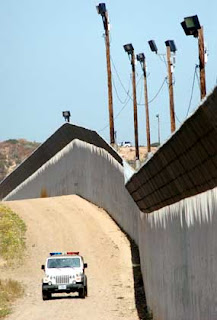
Why is America building a 700 mile wall between them and Mexico? Do people think this will actually work? I listen to statements about sending all the illegal immigrants back. Do people not realize the impact that will have on the economy of America? Would it not be so much more beneficial to help Mexico develop a strong economy so that people don’t want to cross the boarder and seek work in America? It will take time but it will also save money, improve the area and reduce the effectiveness of terrorism.

I was pleased to hear John MaCain acknowledge that Bush may have got things wrong, but he did change the strategy on Iraq and it seems to be having some effect. I was also pleased to hear that negotiation is starting to take place with people in Iraq that they have refused to talk to before and rather held them up as the axis of evil.
More has been achieved through discussion than has ever been achieved through war or building walls for that matter!
January 2007

I was quite surprised by some of the comments made. Edwards spoke about making America an example to the world and a country the world wants to be like! It shows a great lack of understanding when a candidate thinks that the rest of the world wants to be like America. In fact some of the countries in the world actually resent America’s assumption that they should be like them.
I remember going to eastern Europe to speak at a conference and being asked before I spoke by the President, “You aren’t coming with any of that American rubbish are you?”. When I challenged him to explain he said, we have had American consultants over here telling us how to run our business and so far it has always failed. I was not prepared to accept that and so challenged further. He then explained that “their ideas are fine but they make no allowances for our culture or desires. So they fail when we implement them. America sees the world as a series of boxes that things fit into”.
In my travels around the world, I hear the world wanting is a stable America that is an example of excellence and not a dictator. I think John MaCain said that America needs to lead the world, and that is also not true (and not possible with the low credibility it has at the moment). It needs to partner the world and be an example of good governance. In the last six years America has done more to undermine the credibility of democracy that it has done to advance it.
I can’t remember any times in modern history when building walls achieved anything other than expert climbers and resentment. The Berlin Wall is a typical example. The problems in Pakistan today are as a result of the British drawing lines, erecting fences and then leaving.

Why is America building a 700 mile wall between them and Mexico? Do people think this will actually work? I listen to statements about sending all the illegal immigrants back. Do people not realize the impact that will have on the economy of America? Would it not be so much more beneficial to help Mexico develop a strong economy so that people don’t want to cross the boarder and seek work in America? It will take time but it will also save money, improve the area and reduce the effectiveness of terrorism.

I was pleased to hear John MaCain acknowledge that Bush may have got things wrong, but he did change the strategy on Iraq and it seems to be having some effect. I was also pleased to hear that negotiation is starting to take place with people in Iraq that they have refused to talk to before and rather held them up as the axis of evil.
More has been achieved through discussion than has ever been achieved through war or building walls for that matter!
January 2007
Wednesday, January 16, 2008
Passion
Every once and a while it is really great to hear someone speak with passion and common sense. Have a look at:
http://www.ted.com/talks/view/id/204
http://www.ted.com/talks/view/id/204
Monday, January 14, 2008
The US elections
This weekend I heard President Bush speak in Dubai. I have got to the stage when I think he says what he says to convince himself! His comment about dealing with Iran "before it is too late" left me thinking, what is "too late"? Does he mean before he leaves office?
As someone who travels the world, I am amazed at how little the President really understands about the culture of the people in the Middle East and the issues there. Does he not realize how foolish he makes the United States appear when he speaks the way he does? The greatest thing I can see coming out of the Bush administration will be the young people who will vote in the elections this year.
I am not sure they want change as much as to make sure the same mistake is not made again. Nobody believes that Government will change but at least they want people that will not be irrational and fundamentalist in their approaches.
What an interesting year it will be. I believe that there has never been a recession in an election year. There are also a whole bunch of first time voters that have never worked in an economy that is so slow!
Obama speaks of "hope". I think people are looking for competence combined with integrity.
Romney thinks that because he has been successful in business, he can be successful as President! He creates the impression of a competent manager when people are looking for a competent leader.
What a great start to what will turn out to be one of the most interesting elections in the history of United States.
As someone who travels the world, I am amazed at how little the President really understands about the culture of the people in the Middle East and the issues there. Does he not realize how foolish he makes the United States appear when he speaks the way he does? The greatest thing I can see coming out of the Bush administration will be the young people who will vote in the elections this year.
I am not sure they want change as much as to make sure the same mistake is not made again. Nobody believes that Government will change but at least they want people that will not be irrational and fundamentalist in their approaches.
What an interesting year it will be. I believe that there has never been a recession in an election year. There are also a whole bunch of first time voters that have never worked in an economy that is so slow!
Obama speaks of "hope". I think people are looking for competence combined with integrity.
Romney thinks that because he has been successful in business, he can be successful as President! He creates the impression of a competent manager when people are looking for a competent leader.
What a great start to what will turn out to be one of the most interesting elections in the history of United States.
Wednesday, January 09, 2008
It pays to Listen
If there was ever any doubt about the importance of listening, then this week in New Hampshire we were reminded again of the difference it makes.
Hillary Clinton changed her approach to campaigning after Iowa and started to listen instead of telling. If you watched her rallies, she spoke and then listened as people asked her questions. For the first time she opened up the person instead of the campaign machine. What a difference it made.
There are people who are saying that the moment when her voiced cracked when answering a question, was the turning point. I don't think so. The turning point was that she was listening and because of that there was one moment when she showed a real person behind the candidate.

Leadership is about being able to listen as well as being able to speak. It is about hearing and it is about answering the questions on people minds.
9th January 2008
Hillary Clinton changed her approach to campaigning after Iowa and started to listen instead of telling. If you watched her rallies, she spoke and then listened as people asked her questions. For the first time she opened up the person instead of the campaign machine. What a difference it made.
There are people who are saying that the moment when her voiced cracked when answering a question, was the turning point. I don't think so. The turning point was that she was listening and because of that there was one moment when she showed a real person behind the candidate.

Leadership is about being able to listen as well as being able to speak. It is about hearing and it is about answering the questions on people minds.
9th January 2008
Sunday, January 06, 2008
Talking about Change

So Obama wins Iowa and everyone suddenly talks about the same things he has been talking about!! He spoke about "hope" and about "change" and it is soooo obvious that people are wanting change. They want a different approach to Government and not just a change of face.
Today Hillary Clinton said that change is not about talk it is about hard work. Yes it is hard work but that is not enough. Hard work on its own is not effective.
From a leader it is about facilitating change, from a group of people it is about managing the change, from the individual it is about responding to change.
Doing leadership is about inspiring people to respond to the change, it is about having the right people in place to manage the change and it is about achieveing change through people.
The result of Iowa seems to say that people understand this and are looking for the leader to create leadership in line with this.
Friday, January 04, 2008
It is 2008! And we need new Leadership – please.
I am sick of hearing about the “War on Terror”. There is no such thing as a war on terror! That is like saying a war on phobias or a war on bombing. It is a nonsense.
What is terrorism? (Interestingly, no Government has dared to define it). Terrorism is a method of fighting. The method is to create terror in people, which incapacitates them in some way. It does not always have to be physical.
Traditional wars were fought by armies, fighting it out, people getting killed while trying to take control of some ground. Having taken control, the winner implemented an order or regime that was to their liking. That is the way it was done for centuries.
Of course this form of fighting means that the strongest tends to win. Maybe not only strength, but strength has a lot to do with it. So what does the little guy need to do to win? Well, he can find bigger weapons and become stronger! The trouble is the guys with the biggest weapons just keep making theirs bigger as well. They also make it impossible to get the materials and the information to be able to make bigger weapons. Eventually there is a limit to the size of the weapon anyway.
But there is one method of war that has been used over the years in different situations by all sides and has been effective. It is called striking fear into the enemy. If you strike enough fear into the enemy, you can overthrow them without as much violence, or at least minimize the violence.
Japan used it to great effect in the World War II, but then again the British used it many years before in Africa, India and many other places. In fact, striking fear in the enemy has been used by the West for many years as a method of fighting.
Today’s wars are not country against country. They are ideologies fighting an ideology. Afghanistan is not fighting USA or visa versa. There is a group of people that are fighting for what they believe in. They based themselves in Afghanistan but are not the elected rulers of the country.
Of course they have limited access to “strength” or “big enough weapons” in order to fight their fight. They are not physically strong enough or have physical weapons to attack with. However, they have a weapon that can be very powerful if used correctly. It doesn’t have to explode (although if it does it provides visual impact) it doesn’t even have to cost a lot of lives. What it has to do is, scare people enough, so that they don’t function well.
The IRA used it very effectively in United Kingdom for years. The bombings that they undertook were not designed to kill, but rather to scare people. They believed that if the people of United Kingdom were scared enough they would demand their Government give back Northern Ireland.
The war against the colonies in Africa was fought in the same way. Southern Rhodesia and South Africa were typical examples. The aim was not to kill all the ‘whites’; they could have done that because the whites were out-numbered. Instead they tried to undermine the economy of the country so that it had to collapse and then they would be able to take control.
It worked! Of course sanctions from the west were a help, but the fear factor was also a contributing element that made the change happen.
So terrorism is a method of war. It is not a war, as Bush would like to call it, that someone can declare war on! Declaring war on terrorism is like declaring war on war.
The real trouble is that the mind-set of the world that is trying to fight terrorism is using conventional methods of war. This is the mind-set of leaders who were leaders in a different era. What they don’t realise is that they are not fighting a traditional war and that being the physically strongest is now not the most important element of the war.
To show how old fashioned the thinking is they still make their decisions based on their own values and beliefs. They think that killing these people will solve the problem. This premise comes from a western belief that human life is valued and people want to live. The truth is, the people they are fighting don’t hold human life as that important. In fact, these people will gladly die if it is in defence of their beliefs.
This method of war should not be fought with the same mind-set of wars in the past. It requires new thinking and new leadership. Solutions to the current problems are not to be found in simply making bigger weapons or shouting louder.
The real impact of the 9/11 attack on the World Trade Centre in New York was not simply the thousands of people that died, although that was a terrible tragedy. The real impact and outcome has been the way United States has got itself into debt and weakened its position on the world stage. The perpetrators of that dastardly attack achieved what they set out to do. They scared America into acting impetuously and into financially de-stabilising itself. Oh yes, it also got America to take out one of its archenemies that was ruling Iraq, and to de-stabilise that whole region. That was a bonus!
What would have happened if America had not gone off fighting in the Middle East after 9/11? What if America had chosen instead to undermine the people behind the attack and even created enough fear in the region to make it impossible for these people to be supported and to operate?
The truth is we don’t know. But we can take an educated guess and one thing is for sure, America would not be as weak as it is now both financially and influentially.
Recently Gordon Brown refused to attend a summit because Mugabe was attending. This is another example of old type thinking and old style leadership. The British Prime Minister thought he made a stand and achieved some sort of moral victory. In reality, Mugabe’s stature has been improved because he managed to force the British out of the summit. The British were too afraid to attend when Mugabe was there! His influence is stronger in Africa because the British Prime Minister had an old style leadership head on.
Terrorism is not something that will ever go away. It is a powerful method used by bullies in playgrounds and corporations in market places. It is so effective because people react to it.
Look how Bush is jumping around because Iran is making nuclear fuel. President Ahmajinidad is having great fun watching how he is terrorising Bush with his rhetoric about Israel and by pretending to be refining nuclear fuel. He knows that if he can keep America fighting traditional wars, their economy will continue to be effected, their influence will be undermined and in this weakened state they can be brought down to size and dealt with.
It is 2008. This year could be a deciding year for better, or for worse. Let us hope that we will see a new generation of leaders emerge that think differently and are prepared to build, rather then destroy. I hear the American news talking about the need for Presidential candidates with “experience”. I am sorry, but the people with experience are often also those that have the old mind-set. Experience is only of value if placed alongside innovation and fresh thinking. Experience on its own is not enough.
Learn from the past but create the future.
The time has come if the people of America and Iran will elect someone who is not frightened. You see: fear is what makes terrorism work!
January 1st 2008
What is terrorism? (Interestingly, no Government has dared to define it). Terrorism is a method of fighting. The method is to create terror in people, which incapacitates them in some way. It does not always have to be physical.
Traditional wars were fought by armies, fighting it out, people getting killed while trying to take control of some ground. Having taken control, the winner implemented an order or regime that was to their liking. That is the way it was done for centuries.
Of course this form of fighting means that the strongest tends to win. Maybe not only strength, but strength has a lot to do with it. So what does the little guy need to do to win? Well, he can find bigger weapons and become stronger! The trouble is the guys with the biggest weapons just keep making theirs bigger as well. They also make it impossible to get the materials and the information to be able to make bigger weapons. Eventually there is a limit to the size of the weapon anyway.
But there is one method of war that has been used over the years in different situations by all sides and has been effective. It is called striking fear into the enemy. If you strike enough fear into the enemy, you can overthrow them without as much violence, or at least minimize the violence.
Japan used it to great effect in the World War II, but then again the British used it many years before in Africa, India and many other places. In fact, striking fear in the enemy has been used by the West for many years as a method of fighting.
Today’s wars are not country against country. They are ideologies fighting an ideology. Afghanistan is not fighting USA or visa versa. There is a group of people that are fighting for what they believe in. They based themselves in Afghanistan but are not the elected rulers of the country.
Of course they have limited access to “strength” or “big enough weapons” in order to fight their fight. They are not physically strong enough or have physical weapons to attack with. However, they have a weapon that can be very powerful if used correctly. It doesn’t have to explode (although if it does it provides visual impact) it doesn’t even have to cost a lot of lives. What it has to do is, scare people enough, so that they don’t function well.
The IRA used it very effectively in United Kingdom for years. The bombings that they undertook were not designed to kill, but rather to scare people. They believed that if the people of United Kingdom were scared enough they would demand their Government give back Northern Ireland.
The war against the colonies in Africa was fought in the same way. Southern Rhodesia and South Africa were typical examples. The aim was not to kill all the ‘whites’; they could have done that because the whites were out-numbered. Instead they tried to undermine the economy of the country so that it had to collapse and then they would be able to take control.
It worked! Of course sanctions from the west were a help, but the fear factor was also a contributing element that made the change happen.
So terrorism is a method of war. It is not a war, as Bush would like to call it, that someone can declare war on! Declaring war on terrorism is like declaring war on war.
The real trouble is that the mind-set of the world that is trying to fight terrorism is using conventional methods of war. This is the mind-set of leaders who were leaders in a different era. What they don’t realise is that they are not fighting a traditional war and that being the physically strongest is now not the most important element of the war.
To show how old fashioned the thinking is they still make their decisions based on their own values and beliefs. They think that killing these people will solve the problem. This premise comes from a western belief that human life is valued and people want to live. The truth is, the people they are fighting don’t hold human life as that important. In fact, these people will gladly die if it is in defence of their beliefs.
This method of war should not be fought with the same mind-set of wars in the past. It requires new thinking and new leadership. Solutions to the current problems are not to be found in simply making bigger weapons or shouting louder.
The real impact of the 9/11 attack on the World Trade Centre in New York was not simply the thousands of people that died, although that was a terrible tragedy. The real impact and outcome has been the way United States has got itself into debt and weakened its position on the world stage. The perpetrators of that dastardly attack achieved what they set out to do. They scared America into acting impetuously and into financially de-stabilising itself. Oh yes, it also got America to take out one of its archenemies that was ruling Iraq, and to de-stabilise that whole region. That was a bonus!
What would have happened if America had not gone off fighting in the Middle East after 9/11? What if America had chosen instead to undermine the people behind the attack and even created enough fear in the region to make it impossible for these people to be supported and to operate?
The truth is we don’t know. But we can take an educated guess and one thing is for sure, America would not be as weak as it is now both financially and influentially.
Recently Gordon Brown refused to attend a summit because Mugabe was attending. This is another example of old type thinking and old style leadership. The British Prime Minister thought he made a stand and achieved some sort of moral victory. In reality, Mugabe’s stature has been improved because he managed to force the British out of the summit. The British were too afraid to attend when Mugabe was there! His influence is stronger in Africa because the British Prime Minister had an old style leadership head on.
Terrorism is not something that will ever go away. It is a powerful method used by bullies in playgrounds and corporations in market places. It is so effective because people react to it.
Look how Bush is jumping around because Iran is making nuclear fuel. President Ahmajinidad is having great fun watching how he is terrorising Bush with his rhetoric about Israel and by pretending to be refining nuclear fuel. He knows that if he can keep America fighting traditional wars, their economy will continue to be effected, their influence will be undermined and in this weakened state they can be brought down to size and dealt with.
It is 2008. This year could be a deciding year for better, or for worse. Let us hope that we will see a new generation of leaders emerge that think differently and are prepared to build, rather then destroy. I hear the American news talking about the need for Presidential candidates with “experience”. I am sorry, but the people with experience are often also those that have the old mind-set. Experience is only of value if placed alongside innovation and fresh thinking. Experience on its own is not enough.
Learn from the past but create the future.
The time has come if the people of America and Iran will elect someone who is not frightened. You see: fear is what makes terrorism work!
January 1st 2008
Tuesday, October 02, 2007
Proud to be ...........?
I travel the world and visit many societies, cultures and nationalities. I find it interesting to discover the different attitudes to life, the different beliefs and stimuli that motivate different people.
I am currently visiting North America having been in South Africa and the UK in the last month. Something strikes me on this visit. It has occurred to me that the pride people have for their nation, heritage, culture or who they are, varies a great deal.
For example, Canadians are very proud of being Canadian. This pride is despite their divided history and even their current divisions. They are simply proud of who they are and promote their own products, promote their country and do this whilst embracing a changing world. In fact I would describe Canada as one of the most multi-cultural, multi-ethnic nations with the most tolerant and positive attitude. I can genuinely say that people seem to completely ignore the colour of a persons skin and embrace people for who they are and not where they come from. Maybe this has a lot to do with the pride they have in themselves.
Canada is probably one of the few countries that have this pride in such abundance, and consistently. In the United States, there is a lot of pride in who they were! Listen to Americans, they talk about their history with great pride, and so they should. Their founders did them proud in giving birth to a nation, which provided so many opportunities. However, the talk is about what they have done in years gone by and not what is happening now. I am not talking about the current administration either. They are fully divided on that one! I am talking about pride in their nation and who they are.
The country is so divided now that they are more at war with each other than they are with any other country, or what is laughingly called terrorism. I heard a great quote that sums up the situation here, “America, having given the world democracy, is in danger of being strangled by democracy”. I get the feeling that in America, people have to be proud of being American. To not be proud is seen as being anti-American. There is no middle ground. In a society where we can’t speak out against our country for fear of being anti-xxxx, is a dangerous place to be.
France has always been a nation of proud people. But a little thought about the basis of their pride and we discover that it is based more on an attitude. France is proud of being stubborn!! Maybe that is a bit harsh but not too far from the truth. People of France are very fickle and are proud for being proud rather than for what they stand for. For example, the French care about the pronunciation of what you say and not what is being said. As France teeters on the edge of bankruptcy I am reminded of the expression, ‘pride comes before a fall’.
South Africa is interesting because their first President after apartheid, Nelson Mandela instilled in people that they were a “rainbow nation” and should be proud of who they have become, despite their history. I wonder if he took a look at Canada and came up with that thinking? Certainly the country uses the logo “Proudly South African” on its products, and the people refer to “Proudly South African” on as many occasions as possible, in as many places as it can.
Mostly it is true, people are proud of what they have become. Those that weren’t have mostly moved on. They have a right to be proud as well. The way they have largely settled their past and moved on is an example to so many. If they can sustain their pride in the future and not keep getting dragged back to the past, they will do well.
I am not saying that countries don’t have pride. I am saying that the pride is weak or poorly placed and not an enduring pride that feeds the culture for good.
UK has little or no pride left. Despite various rhetoric by Prime Ministers, the basis is not there. Similar to America, there is a lot of division, the pride is in the history, it is not as evident as it was a generation ago.
In Pakistan I found people that were very proud of their traditions and their cultures. They were keen to share with me the different types of foods and show me aspects of their culture. They were also very humble. Very willing to learn, very keen to discover and also very ashamed of the people that were giving the West a poor impression of who they are.
All nations have a degree of pride but it is what it is based on that makes a difference as much as the level of pride.
Jews are proud on principle!
New Zealanders need to win the rugby to be proud ☺
Australians are proud of being different and being able to swear the most.
As with all things, it is a matter of degree. Certainly, the wrong type of pride can alienate and ultimately undermine you or country. Too little pride gives no meaning and does not create a basis for which people can belong or be motivated to contribute.
Ask yourself this, if you wanted to live with a group of people that are proud of who they are and what they are creating for the future, who would you think of first? How would being with them affect you?
Pride for the right reason is a worthy pride.
I am currently visiting North America having been in South Africa and the UK in the last month. Something strikes me on this visit. It has occurred to me that the pride people have for their nation, heritage, culture or who they are, varies a great deal.
For example, Canadians are very proud of being Canadian. This pride is despite their divided history and even their current divisions. They are simply proud of who they are and promote their own products, promote their country and do this whilst embracing a changing world. In fact I would describe Canada as one of the most multi-cultural, multi-ethnic nations with the most tolerant and positive attitude. I can genuinely say that people seem to completely ignore the colour of a persons skin and embrace people for who they are and not where they come from. Maybe this has a lot to do with the pride they have in themselves.
Canada is probably one of the few countries that have this pride in such abundance, and consistently. In the United States, there is a lot of pride in who they were! Listen to Americans, they talk about their history with great pride, and so they should. Their founders did them proud in giving birth to a nation, which provided so many opportunities. However, the talk is about what they have done in years gone by and not what is happening now. I am not talking about the current administration either. They are fully divided on that one! I am talking about pride in their nation and who they are.
The country is so divided now that they are more at war with each other than they are with any other country, or what is laughingly called terrorism. I heard a great quote that sums up the situation here, “America, having given the world democracy, is in danger of being strangled by democracy”. I get the feeling that in America, people have to be proud of being American. To not be proud is seen as being anti-American. There is no middle ground. In a society where we can’t speak out against our country for fear of being anti-xxxx, is a dangerous place to be.
France has always been a nation of proud people. But a little thought about the basis of their pride and we discover that it is based more on an attitude. France is proud of being stubborn!! Maybe that is a bit harsh but not too far from the truth. People of France are very fickle and are proud for being proud rather than for what they stand for. For example, the French care about the pronunciation of what you say and not what is being said. As France teeters on the edge of bankruptcy I am reminded of the expression, ‘pride comes before a fall’.
South Africa is interesting because their first President after apartheid, Nelson Mandela instilled in people that they were a “rainbow nation” and should be proud of who they have become, despite their history. I wonder if he took a look at Canada and came up with that thinking? Certainly the country uses the logo “Proudly South African” on its products, and the people refer to “Proudly South African” on as many occasions as possible, in as many places as it can.
Mostly it is true, people are proud of what they have become. Those that weren’t have mostly moved on. They have a right to be proud as well. The way they have largely settled their past and moved on is an example to so many. If they can sustain their pride in the future and not keep getting dragged back to the past, they will do well.
I am not saying that countries don’t have pride. I am saying that the pride is weak or poorly placed and not an enduring pride that feeds the culture for good.
UK has little or no pride left. Despite various rhetoric by Prime Ministers, the basis is not there. Similar to America, there is a lot of division, the pride is in the history, it is not as evident as it was a generation ago.
In Pakistan I found people that were very proud of their traditions and their cultures. They were keen to share with me the different types of foods and show me aspects of their culture. They were also very humble. Very willing to learn, very keen to discover and also very ashamed of the people that were giving the West a poor impression of who they are.
All nations have a degree of pride but it is what it is based on that makes a difference as much as the level of pride.
Jews are proud on principle!
New Zealanders need to win the rugby to be proud ☺
Australians are proud of being different and being able to swear the most.
As with all things, it is a matter of degree. Certainly, the wrong type of pride can alienate and ultimately undermine you or country. Too little pride gives no meaning and does not create a basis for which people can belong or be motivated to contribute.
Ask yourself this, if you wanted to live with a group of people that are proud of who they are and what they are creating for the future, who would you think of first? How would being with them affect you?
Pride for the right reason is a worthy pride.
Thursday, August 30, 2007
Travelling into Heathrow
Travelling as I do, I see lots of airports. Heathrow is one of my least favourite but on a recent trip out I was really impressed with the service at security. They had obviously done some work both in terms of layout and in terms of staff development. The system was far more efficient and the security people were helpful, friendly and a pleasure to be with.
I left UK with a good feeling.
Today I arrived at Heathrow on my return journey. Whenever I arrive I try to see the first impressions a tourist or foreigner would get of Heathrow and of UK. I arrive at the new wing and so it is clean and looking very nice. However, as I walk the corridors I come across walkways and escalators that are not working (I have never been through Heathrow when all the escalators and moving walkways are working)
I arrive at Immigration to discover the new IRIS system is not working and there is a queue to see the Immigration Officer. The sign says that if you are at this point, it will take 5 minutes, and that is the point I join at.
The escalator to the baggage hall is not working and as I enter the hall I see a group of people stood in the centre where there is the only video display showing which carrousel each flights baggage will be sent to. Being in the middle of the hall it means people congregate there to wait to see where they need to go. This means that anyone trying to get through the hall has a crowd of people to make their way through. As we stand waiting, there is a constant series of “excuse me” as passengers are trying to get through the standing people.
When you have to wait 25 minutes to be told which carrousel your baggage will be on you start to notice that British Airways flights are being given priority. Any BA flight is on a carousel within 5 minutes. I start to feel that I am a second class person for having flown the wrong airline!
I decide to buy my Heathrow Express ticket while I am waiting. Next to the underground ticket machine there is a sign that tells me there are three ways to get to London. Then I discover that there is no way to buy a ticket for the Heathrow Express. Because of the way it is laid out, I can imagine that a number of people have bought a ticket at this machine thinking they can use it on Heathrow Express.
Finally we get told the carousel to use and we make our way there only to wait another 5 minutes. Boredom is setting in and it is at this stage you start to notice how dirty the place is. The cleaner does not get under the carousel or up to the edges of the walls etc.
Bags start to arrive and they flow in ones and twos and then a gap. Finally we get fours and fives coming up the conveyor. The electronic eye (useless invention when it does work) stops the baggage coming off the conveyor because it senses bags on the carousel. The problem is, this one is set wrong and so stops bags and waits until the bag on the carousel is in front of it and then dumps itself on top of the bag. Bags bounce around all over the place. There are times when no bags come up at all! First Class and Priority bags are the last to make it along with bags in transit. Of course transit passengers are starting to pull their hair out and keep looking at their watches with sweat starting to form on their foreheads.
Finally my bag arrives after an hour waiting in the baggage hall! Due to the position of our carousel we now need to be part of the people that say “excuse me”, “excuse me”, “excuse me”…… as we make our way towards Customs and the green route.
As I finally sit down on the Heathrow Express I ponder about my experience. Why is it so difficult to make a good impression? It must take at least the same amount of energy to make a bad impression.
If I were a first time visitor at Heathrow, I would be forgiven for thinking that I had landed in a third world (or at best a second world) country. Why can I say that with confidence? Because I have been to so called second and third world countries and the airports are far more efficient than Heathrow.
A final thought went through my mind. I did not see, or to be specific, hear any English people working at Heathrow. All of them were of Asian or Middle Eastern descent. I am sorry to say that the thought went through my mind, I wonder if they would behave and work the way they do in Heathrow if they were working in their birth country? My experience is that in Asia and Middle East, people take a lot more pride in their work. Why are they not proud to work in UK? Is it because we have learnt to accept mediocrity? Is it because we lack leaders?
I opened the newspaper to read the headline, BAA plan to reduce their staff by 2000 people!!!!!! Oh dear. Can it get worse?
I left UK with a good feeling.
Today I arrived at Heathrow on my return journey. Whenever I arrive I try to see the first impressions a tourist or foreigner would get of Heathrow and of UK. I arrive at the new wing and so it is clean and looking very nice. However, as I walk the corridors I come across walkways and escalators that are not working (I have never been through Heathrow when all the escalators and moving walkways are working)
I arrive at Immigration to discover the new IRIS system is not working and there is a queue to see the Immigration Officer. The sign says that if you are at this point, it will take 5 minutes, and that is the point I join at.
The escalator to the baggage hall is not working and as I enter the hall I see a group of people stood in the centre where there is the only video display showing which carrousel each flights baggage will be sent to. Being in the middle of the hall it means people congregate there to wait to see where they need to go. This means that anyone trying to get through the hall has a crowd of people to make their way through. As we stand waiting, there is a constant series of “excuse me” as passengers are trying to get through the standing people.
When you have to wait 25 minutes to be told which carrousel your baggage will be on you start to notice that British Airways flights are being given priority. Any BA flight is on a carousel within 5 minutes. I start to feel that I am a second class person for having flown the wrong airline!
I decide to buy my Heathrow Express ticket while I am waiting. Next to the underground ticket machine there is a sign that tells me there are three ways to get to London. Then I discover that there is no way to buy a ticket for the Heathrow Express. Because of the way it is laid out, I can imagine that a number of people have bought a ticket at this machine thinking they can use it on Heathrow Express.
Finally we get told the carousel to use and we make our way there only to wait another 5 minutes. Boredom is setting in and it is at this stage you start to notice how dirty the place is. The cleaner does not get under the carousel or up to the edges of the walls etc.
Bags start to arrive and they flow in ones and twos and then a gap. Finally we get fours and fives coming up the conveyor. The electronic eye (useless invention when it does work) stops the baggage coming off the conveyor because it senses bags on the carousel. The problem is, this one is set wrong and so stops bags and waits until the bag on the carousel is in front of it and then dumps itself on top of the bag. Bags bounce around all over the place. There are times when no bags come up at all! First Class and Priority bags are the last to make it along with bags in transit. Of course transit passengers are starting to pull their hair out and keep looking at their watches with sweat starting to form on their foreheads.
Finally my bag arrives after an hour waiting in the baggage hall! Due to the position of our carousel we now need to be part of the people that say “excuse me”, “excuse me”, “excuse me”…… as we make our way towards Customs and the green route.
As I finally sit down on the Heathrow Express I ponder about my experience. Why is it so difficult to make a good impression? It must take at least the same amount of energy to make a bad impression.
If I were a first time visitor at Heathrow, I would be forgiven for thinking that I had landed in a third world (or at best a second world) country. Why can I say that with confidence? Because I have been to so called second and third world countries and the airports are far more efficient than Heathrow.
A final thought went through my mind. I did not see, or to be specific, hear any English people working at Heathrow. All of them were of Asian or Middle Eastern descent. I am sorry to say that the thought went through my mind, I wonder if they would behave and work the way they do in Heathrow if they were working in their birth country? My experience is that in Asia and Middle East, people take a lot more pride in their work. Why are they not proud to work in UK? Is it because we have learnt to accept mediocrity? Is it because we lack leaders?
I opened the newspaper to read the headline, BAA plan to reduce their staff by 2000 people!!!!!! Oh dear. Can it get worse?
Tuesday, August 28, 2007
Getting ill while travelling
I am in South Africa and have an attack of gout. It is not something that happens often to me and my visits to the Doctor has done nothing to help me plan, deal with or learn about my condition. It has been a year since I had my last attack and this came on very suddenly. It is always a worry because the pain is distracting and it can limit my effectiveness as a professional speaker.
What do I do? Going to a Doctor is not something I relish in England, no mind in South Africa. The cost, what will they do, will I catch something, etc.
A close friend insists I go to the Doctor as I limp around in pain. I get loaded into the car on Saturday morning and driven into town to a Doctors surgery. We walk in at 9.35am and explain that I am visiting the country and need to see the Doctor.
The receptionist is not phased and she explains that the Doctor has some pre-planned appointments but she will see what she can do.
Three and a half minutes later I am sat in front of a doctor! He is cheerful and asks me questions which start with, “Have you been drinking too much South African wine?” We laugh and the examination goes ahead with the tone set. He is interested, considerate, and he oozes confidence combined with competence in a way that relaxes me.
Finally he explains (in a way that nobody has ever done before) what gout is, what happens and what he is going to recommend for me.
The recommendation is an injection of a “mix” they do. I cannot even start to pronounce the mix but he goes on to explain that the one will give relief within the hour and the other will kick in four hours later. “That gets you over the initial problem” he says, “and then I will give you a prescription for two things…”
He explains that one breaks down the crystals in the foot and the other is for pain relief if I need it.
Duly dealt with, including an injection and a prescription in hand, I leave the doctors consulting room. (By the way the injection was the least painful one I have ever had in my life) The Doctor hands me a leaflet on gout and as a true patriotic South African smiles and says, “Keep drinking the South African wine hey!”. We laugh, shake hands and he holds the door open as I leave.
Now a new fear clutches me as I realise I will have to pay for the consultation and treatment. I approach the receptionist with my two pieces of paper and she has a look at what is there. A few moments and she looks up and tells me I owe R236.00 (£16.27 or $8.13) for everything. I put away the credit card and pull out cash for such a small amount.
We walk into pharmacy and get a weeks treatment of both items on the prescription which costs me another R180 (£12.41 or $6.20). We go for a coffee and by the time we leave the coffee shop I can walk normally and feel great.
I am gobsmacked at the service I got, the speed I was dealt with and the relief I have in such a short period of time. Never in 10 years of going to Doctors and Consultants in UK have I had the same service and certainly I have never been able to see a Doctor at a moments notice.
I ask my friends if this is normal? “Oh yes, quite normal”. They are British and so know what happens in UK. They go on to tell me how she had a problem and she phoned the Consultant at the hospital directly and asked to see him. He said yes and the appointment was made the same day!
He examined her and said she needed surgery. He then asked when she would like it?! She said next Thursday would be good and he phoned up and two minutes later it was booked!!!!
In UK, if I want to see a Consultant it has to be through a Doctor and I have never seen one within four weeks of seeing the Doctor. In fact the last time the Doctor in UK referred me to a Consultant, I gave up trying to arrange an appointment after three attempts. In future I think I will get on a plane and fly to South Africa.
My friend tells me that increasingly people are coming to South Africa for plastic surgery and dental work in particular because it is cheaper, more efficient and they can combine it with an amazing holiday.
I ask myself, what is wrong with the systems in the West? We seem to have made it too complicated. The health service in UK has become a nightmare of bureaucracy and littered with frustrated people who have lost a common sense of purpose and even possibly even pride in their profession.
Personally? I know where I want to go if I really need medical advise in the future.
What do I do? Going to a Doctor is not something I relish in England, no mind in South Africa. The cost, what will they do, will I catch something, etc.
A close friend insists I go to the Doctor as I limp around in pain. I get loaded into the car on Saturday morning and driven into town to a Doctors surgery. We walk in at 9.35am and explain that I am visiting the country and need to see the Doctor.
The receptionist is not phased and she explains that the Doctor has some pre-planned appointments but she will see what she can do.
Three and a half minutes later I am sat in front of a doctor! He is cheerful and asks me questions which start with, “Have you been drinking too much South African wine?” We laugh and the examination goes ahead with the tone set. He is interested, considerate, and he oozes confidence combined with competence in a way that relaxes me.
Finally he explains (in a way that nobody has ever done before) what gout is, what happens and what he is going to recommend for me.
The recommendation is an injection of a “mix” they do. I cannot even start to pronounce the mix but he goes on to explain that the one will give relief within the hour and the other will kick in four hours later. “That gets you over the initial problem” he says, “and then I will give you a prescription for two things…”
He explains that one breaks down the crystals in the foot and the other is for pain relief if I need it.
Duly dealt with, including an injection and a prescription in hand, I leave the doctors consulting room. (By the way the injection was the least painful one I have ever had in my life) The Doctor hands me a leaflet on gout and as a true patriotic South African smiles and says, “Keep drinking the South African wine hey!”. We laugh, shake hands and he holds the door open as I leave.
Now a new fear clutches me as I realise I will have to pay for the consultation and treatment. I approach the receptionist with my two pieces of paper and she has a look at what is there. A few moments and she looks up and tells me I owe R236.00 (£16.27 or $8.13) for everything. I put away the credit card and pull out cash for such a small amount.
We walk into pharmacy and get a weeks treatment of both items on the prescription which costs me another R180 (£12.41 or $6.20). We go for a coffee and by the time we leave the coffee shop I can walk normally and feel great.
I am gobsmacked at the service I got, the speed I was dealt with and the relief I have in such a short period of time. Never in 10 years of going to Doctors and Consultants in UK have I had the same service and certainly I have never been able to see a Doctor at a moments notice.
I ask my friends if this is normal? “Oh yes, quite normal”. They are British and so know what happens in UK. They go on to tell me how she had a problem and she phoned the Consultant at the hospital directly and asked to see him. He said yes and the appointment was made the same day!
He examined her and said she needed surgery. He then asked when she would like it?! She said next Thursday would be good and he phoned up and two minutes later it was booked!!!!
In UK, if I want to see a Consultant it has to be through a Doctor and I have never seen one within four weeks of seeing the Doctor. In fact the last time the Doctor in UK referred me to a Consultant, I gave up trying to arrange an appointment after three attempts. In future I think I will get on a plane and fly to South Africa.
My friend tells me that increasingly people are coming to South Africa for plastic surgery and dental work in particular because it is cheaper, more efficient and they can combine it with an amazing holiday.
I ask myself, what is wrong with the systems in the West? We seem to have made it too complicated. The health service in UK has become a nightmare of bureaucracy and littered with frustrated people who have lost a common sense of purpose and even possibly even pride in their profession.
Personally? I know where I want to go if I really need medical advise in the future.
Sunday, August 26, 2007
Another way...please!
Those of you who know me will know that I believe that society in the West is being strangled by fear of litigation as people spend more time covering their backs and ensuring that they are absolutely covered in the case of anything going wrong, or an accident happening. This atmosphere, which is being perpetuated by Governments in most cases, creates bureaucracy in organisations that stifles their creativity and in many cases, their ability to compete in an increasing global market.
China is at the other end of the spectrum producing goods that are being recalled from the shelves because they have been produced without the care and quality checks that make them safe. These mistakes are costing corporations dearly and wiping out some of the significant savings of having their manufacturing in Asia.
Recently Mattel had to recall toys because of lead paint being used and a problem with magnets. Already lawyers are seeking class action suits to force Mattel to pay for children to be tested for lead poisoning!
There have been a number of issues with goods being manufactured in China including mattresses, being returned for having been sprayed with poisonous chemicals to avoid infestation. Clothes, toothpaste, faulty tyres, dog food, etc. have all been in the news over the last couple of months with questions about their quality and as a result their danger to consumers.
As lawyers start to hover in anticipation of a chance to add to the problem with class actions suits and ways to make their money, we have to ask ourselves, isn’t there another way? Do we have to resort to this old fashioned method of retaliation that stifles innovation and creativity? For some organisations, creativity and innovation is their ONLY way of making money.
How can we blame China?
China does not have the wealth of experience that the West has in their development. If we look at Japan, it had to be educated (notice the word was not ‘told’) about the importance of quality. Once it understood about the importance of quality, Japan embarked on producing a quality product and, only then, did it seek to find ways of cutting the costs in the process down whilst maintaining the quality.
That education process is a vital link. How can we blame companies in China that are being given target prices to produce goods and so price becomes their primary focus? Quality becomes a secondary issue. But then we scream and shout when the quality is poor and try to blame China!
Dutch businessman Jan Kemeling sums it up well:
"It's like this: a Western company tells the Chinese that they have to make something that costs 10 euros, even though they know that the raw materials cost 15. So it stands to reason that the Chinese are going to take something out to arrive at that price of 10. They are going to look for ways to save a bit of money. Which means buying in cheaper paint or cheaper steel or whatever. And that's when the quality starts to slide."
http://www.radionetherlands.nl/currentaffairs/chi070824mc
In the case of the lead paint on Mattel toys, it seems that the Chinese manufacturing company outsourced the painting to another company that did not have the quality procedures in place! We can’t blame them for outsourcing in this way because we taught them that. We equally can’t blame them for forcing the outsourced company to do it cheaply when that is what the West taught them was the most important criteria.
The West needs to take a more responsible view and learn the importance of measuring the right things or at least teaching China how to prioritize measurements. Price without the quality IS NOT CHEAP.
So I ask as the lawyers add to the problem with their class action suites and scared business leaders frantically attempt to cover their ‘backs’ and limit the damage: Who is taking a step out of this blame culture and seeing where the real problem is?
As you consider that question, let me bring another thought to the table.
On 21st August we saw the return of the space shuttle Endeavour from the international space station after nearly two weeks away from earth. The shuttle was brought back a day early because of the concerns about Hurricane Dean.
Space shuttle Columbia in 2003 with seven crew were lost when entering earth’s orbit because of a hole made in the wing from some foam falling off at take off. Everything was put on hold to rectify the problem! Prior to Endeavour’s launch this time, NASA said that they had sorted out the issues relating to take-off that had caused eventual disasters of previous missions.
On the 8th August, the world was then shocked to discover that the space shuttle Endeavour was yet again damaged on take-off by falling foam. There were anxious moments when the shuttle flew back to earth and re-entered the earth atmosphere. Would another disaster befall this mission?
Fortunately, the shuttle returned to earth safely and NASA announced that once and for all they were going to get to the bottom this issue and ensure that the shuttle was not damaged. Once again more promises!
A friend said to me recently, “How would you like to get in a space craft made of tens of thousands of parts all made by a company that submitted the lowest tender?”
What a powerful question.
There has to be another way! Litigation and the fear of class action suites is not the way forward. It makes the lawyers rich and brings out the worst in humanity.
For China, education and good measurements are vital. Learn from Japan and educate people at every level of the organisation about quality first and then when that is right, seek ways to drive down costs within that framework.
For NASA I have a simple way of solving the foam issue. Every space flight in future carries one of the Executive Boards grandchildren on the voyage!
China is at the other end of the spectrum producing goods that are being recalled from the shelves because they have been produced without the care and quality checks that make them safe. These mistakes are costing corporations dearly and wiping out some of the significant savings of having their manufacturing in Asia.
Recently Mattel had to recall toys because of lead paint being used and a problem with magnets. Already lawyers are seeking class action suits to force Mattel to pay for children to be tested for lead poisoning!
There have been a number of issues with goods being manufactured in China including mattresses, being returned for having been sprayed with poisonous chemicals to avoid infestation. Clothes, toothpaste, faulty tyres, dog food, etc. have all been in the news over the last couple of months with questions about their quality and as a result their danger to consumers.
As lawyers start to hover in anticipation of a chance to add to the problem with class actions suits and ways to make their money, we have to ask ourselves, isn’t there another way? Do we have to resort to this old fashioned method of retaliation that stifles innovation and creativity? For some organisations, creativity and innovation is their ONLY way of making money.
How can we blame China?
China does not have the wealth of experience that the West has in their development. If we look at Japan, it had to be educated (notice the word was not ‘told’) about the importance of quality. Once it understood about the importance of quality, Japan embarked on producing a quality product and, only then, did it seek to find ways of cutting the costs in the process down whilst maintaining the quality.
That education process is a vital link. How can we blame companies in China that are being given target prices to produce goods and so price becomes their primary focus? Quality becomes a secondary issue. But then we scream and shout when the quality is poor and try to blame China!
Dutch businessman Jan Kemeling sums it up well:
"It's like this: a Western company tells the Chinese that they have to make something that costs 10 euros, even though they know that the raw materials cost 15. So it stands to reason that the Chinese are going to take something out to arrive at that price of 10. They are going to look for ways to save a bit of money. Which means buying in cheaper paint or cheaper steel or whatever. And that's when the quality starts to slide."
http://www.radionetherlands.nl/currentaffairs/chi070824mc
In the case of the lead paint on Mattel toys, it seems that the Chinese manufacturing company outsourced the painting to another company that did not have the quality procedures in place! We can’t blame them for outsourcing in this way because we taught them that. We equally can’t blame them for forcing the outsourced company to do it cheaply when that is what the West taught them was the most important criteria.
The West needs to take a more responsible view and learn the importance of measuring the right things or at least teaching China how to prioritize measurements. Price without the quality IS NOT CHEAP.
So I ask as the lawyers add to the problem with their class action suites and scared business leaders frantically attempt to cover their ‘backs’ and limit the damage: Who is taking a step out of this blame culture and seeing where the real problem is?
As you consider that question, let me bring another thought to the table.
On 21st August we saw the return of the space shuttle Endeavour from the international space station after nearly two weeks away from earth. The shuttle was brought back a day early because of the concerns about Hurricane Dean.
Space shuttle Columbia in 2003 with seven crew were lost when entering earth’s orbit because of a hole made in the wing from some foam falling off at take off. Everything was put on hold to rectify the problem! Prior to Endeavour’s launch this time, NASA said that they had sorted out the issues relating to take-off that had caused eventual disasters of previous missions.
On the 8th August, the world was then shocked to discover that the space shuttle Endeavour was yet again damaged on take-off by falling foam. There were anxious moments when the shuttle flew back to earth and re-entered the earth atmosphere. Would another disaster befall this mission?
Fortunately, the shuttle returned to earth safely and NASA announced that once and for all they were going to get to the bottom this issue and ensure that the shuttle was not damaged. Once again more promises!
A friend said to me recently, “How would you like to get in a space craft made of tens of thousands of parts all made by a company that submitted the lowest tender?”
What a powerful question.
There has to be another way! Litigation and the fear of class action suites is not the way forward. It makes the lawyers rich and brings out the worst in humanity.
For China, education and good measurements are vital. Learn from Japan and educate people at every level of the organisation about quality first and then when that is right, seek ways to drive down costs within that framework.
For NASA I have a simple way of solving the foam issue. Every space flight in future carries one of the Executive Boards grandchildren on the voyage!
Friday, August 03, 2007
Madeline Albright speaks

I had the pleasure of hearing Madeline Albright speak at the SHRM conference. She spoke well and made some excellent comments about the state of the world.
Hear is an official summary of her speech:
Albright Shares Hiring Tips, Middle East Peace Proposals
By J.J. Smith
LOS ANGELES—Former Secretary of State Madeleine K. Albright demonstrated her diplomatic skills by offering tips for HR professionals when hiring an executive—as well as proposals for peace in the Middle East—during her keynote address here March 19, 2007, at the Society for Human Resource Management (SHRM) Global Forum and Exhibition.
Albright said that, during her government service, she has had the opportunity to engage some of the most powerful men and women in the world, and that, before she met a leader, she would obtain various assessments from people who met with that person before. These methods can be applied when conducting interviews for top corporate positions, she said.
It is essential to get as much information as possible on a potential hire before meeting him or her, and, by necessity, “some of it is in written form.” However, it is important to talk to people who know that person as well. But even if an HR professional does manage to obtain vast amounts of information on a potential managerial hire, “in the end a lot of it does come down to a gut level, and there is no way to not make a mistake,” she said.
On Dec. 5, 1996, President Clinton nominated Albright as the first female secretary of state. After being confirmed unanimously by the U.S. Senate, she was sworn in to become the highest-ranking woman in the U.S. government. “I loved being secretary of state,” Albright said. After leaving government service, she entered the private sector, where she has “enjoyed the opportunity to meet with people such as [global HR professionals] who deeply are interested in foreign affairs, but from a different perspective.”
“The truth is, my own perspective has changed since I decided to start a business,” she said. “It’s called the Albright Group, and we offer strategic consulting services in social responsibility issues, especially to companies interested in emerging democracies.”
While in government, Albright said, she frequently turned to the business community for advice when making decisions about foreign policy because business people and diplomats have much in common. “Whether you’re a business person or a diplomat, you have to work in a global environment” that requires knowing “when to hold your tongue and when to be blunt,” she said. “And you have to understand that every time you’re wrong you will be held accountable. But, often, when you’re right, the credit for success will stop one pay grade above.”
Business people and diplomats are expected to have the gift of prophecy, Albright said. “It’s not enough to know what is happening today; you have to be able to predict what is happening next week, next month, next year,” she said. “This is true whether you’re managing human resources or managing world affairs.”
Some people are still predicting that the global economy will take off, and some say it will be brought down by instability and anxiety about the future. Some global forecasters fear that divisions about religion and culture will create ever-widening circles of conflict. And others point hopefully to the lack of tension among the leading powers.
“Given all that is going on, I’m often asked if I’m an optimist or a pessimist. I reply: ‘I’m an optimist who worries a lot,’ ” Albright said, adding that her optimism is based on “faith in democracy, free enterprise and the desire of most people to live free.” However, while she has faith in the resilience of the democratic system, she worries about the plague of terrorism, which remains widespread. “I worry about Afghanistan, where a weak government struggles against warlords and the Taliban with no victory in sight,” she said.
In addition, Albright worries “about the dark side of globalization, which hastens the spread of false and deadly ideas, the proliferation of deadly arms, and … spreads the gap between rich and poor both within and among nations.”
Albright is worried that democracy has slowed in some countries where “nationalization, repression and other failed policies from the past” have resurfaced.
But, above all else, Albright said, she worries “about Iraq and the Middle East because of the efforts of violent extremists to exploit chaos in order to advance their cause.” According to U.S. intelligence reports, the invasion of Iraq has increased the danger of international terror, making it essential for Gen. David Patreus and our forces in Iraq to succeed. “Unfortunately our troops have been caught in the middle of a civil war with the impossible mission to try to protect all sides against violence by all sides,” she said.
Nonetheless, she agrees with President Bush that it would be disastrous for the United States to leave Iraq under the present circumstances, but it might also be a disaster for the United States to stay. “If our forces are not in a position to make a difference, we have an overriding duty to bring them home sooner rather than later,” she said. In addition, the problems in Iraq have reached the point where our leaders no longer have any good options. “Whatever we decide to do, we will face great risks and the possibility of deeper disaster, so all we can hope for is to limit the damage,” she said, adding that there are four steps that should be applied in Iraq and broadly across the Middle East. They are:
• Contain the risk to our troops by giving them jobs that make the most sense; train Iraqis; step up the fight against Al Qaeda; and guard Iraq’s borders to prevent a wider war.
• Encourage a political settlement in Iraq that will give each side more than it would obtain through continued violence. Such settlements must include an equable sharing of oil, the protection of minority rights and the sharing of power between the central government in Baghdad and various regions.
• Pressure Iraq’s neighbors and our allies to do more to create stability.
• Consider the situation in the Persian Gulf as part of a larger strategy that includes revised peace negotiations between Arabs and Israel.
Concerning an effort to engage Iraq’s neighbors in halting violence, Albright said that during her tenure as secretary of state she was confronted with strife in the Balkans in which each faction inside the region had an ally outside the region from which it received arms and support. The solution was to get all the countries with an interest in the Balkans to work together. Something similar should be tried in Iraq, she said. If such a plan is implemented, the involvement of Iran is significant, she said. It is generally forgotten that Iraq invaded Iran during the 1980s, initiating a war that killed more than 1 million people.
“Today, Iraq is divided and weak, while Iran has more influence than at any time in a century and Iran’s president Mahmoud Ahmadinejad has taken advantage of the regional turmoil to try to present himself on the world stage,” she said. By insisting on Iran’s right to reprocess nuclear fuel, questioning Israel’s right to exist and challenging the morality of America’s actions, Ahmadinejad tries to solidify his shaky domestic political base, she said.
The Bush administration deserves support for its efforts to persuade Iran to forgo the option of developing nuclear arms, Albright said. Those efforts are laborious, but the combination of economic sanctions and pressure on oil supplies may cause Iran to look for face-saving ways out. However, the administration has accused Iran of arming Shiite militias inside Iraq. The United States is right to protest and present evidence supporting the allegations, but the administration should not do anything to invite a wider war, she said.
Over the long term, the United States would benefit immensely from improved relations with Iran. There are no objective reasons why American and Iranian goals must clash, because the problems between Iran and the United States are ideological and potentially resolvable, according to Albright. “I fear a war would open wounds that would never close at great cost to us and to the world, so America’s focus should be on how to build peace, not how to justify another war,” she said.
She said one of the United States’ major accomplishments of the past half-century has been to gain the acceptance of Israel’s right to exist by virtually every government in the Middle East, including the Palestine Liberation Organization. “With that principle clearly understood, we should do all we can to encourage the creation of a viable Palestinian partner with whom Israel can negotiate,” she said.
Peace will not be achieved easily as long as there are elements within Islam, Christianity and Judaism who believe that war in the Middle East has been foretold by scripture, and that the decisive battle between good and evil will take place within that region, she said. “Armageddon is not a foreign policy,” she said. Those who believe God is directing events might begin by obeying God’s commandments instead of ignoring them. There’s nothing preordained about murder and mayhem in the Middle East.
Since the attacks of Sept. 11, it has been natural to focus on the threat posed by terrorism and the drama in the Middle East, but the world elsewhere has not stood still, Albright said. “In fact, it has been engaged in a transformation as profound as any since the industrial revolution,” she said, adding, “this may well be one of those periods that people look back on and say history moved from one era to another.” It is called globalization, but it is nothing more than the acceleration of trends that have been going on for decades. Human resource professionals are exposed to these trends every day. More companies are global in scope, and more business people travel overseas or work overseas on a permanent basis, she said.
Need for Training
That has created a need for more training, not only in job skills, but also in such matters as security, language and culture. One of the major trends is a shift in economic and political power from West to East. As countries such as China and India continue to develop, new challenges will arise, such as finding a way for billions of people to emerge from poverty into a middle-class lifestyle without exhausting resources or destroying the health of our planet, she said.
That requires developed nations to pay a great deal of attention to China, Albright said. At one time, Albright believed that all the Chinese wanted from the United States was an assurance that U.S. policy on Taiwan would not change. Now China’s concerns are economic, she said. China’s growth rate remains among the world’s most impressive, but such growth has generated an enormous appetite for natural resources such as oil, minerals and timber. As a buyer on the world market, China is welcomed by those with resources to sell, leading to an expansion of China’s diplomatic and commercial ties on almost every continent, she said. China’s economic clout has given it the confidence to be more assertive on the world stage.
While China is a rising country, it is also a nervous country, for the expectations of the Chinese are growing, unemployment is high and the gap between the rich and the poor is widening, Albright said. There has been a dramatic increase in public protest, and adding to the pressure is that the Summer Olympics will be held in Beijing in 2008, she said. China’s leaders will want to avoid controversy between now and when the games are held, she said.
All of the economic activity known as globalization challenges the U.S. leadership “to establish and maintain rules that enable countries to prosper together instead of at each other’s expense,” Albright said. That will not happen automatically, for it is not likely that governments will make the right choices, and it should not be assumed that the forces of enlightenment and freedom will prevail, she said. “As in Iraq, good intentions can lead to unintended consequences,” she said, adding that “those who feel threatened by globalization can be counted on to make their fears known through nationalism, protectionism and political protest.” Others will see the 21st century as the battle ground for re-fighting the religious wars of the Middle Ages, she said.
For the United States to succeed, it needs to do the best possible job not only expressing its beliefs but also understanding how and why others act as they do, Albright said. The United States has to remain true to democratic principles, “and we have to remember no matter how much we think we know, there’s always a lot more to learn,” she said.
J.J. Smith is manager of SHRM Online’s Global HR Focus Area.
Thursday, August 02, 2007
I am back. Sorry for the break
It has been a hectic year and I have not been disciplined enough to keep my blog up to date. No excuses, and I will rectify that from now on.
What has been happening so far? Well we have had a lot of challenges but also a lot of great things happening. The down side has been the death of my Mother in March. It was not unexpected but it still is a challenge. My Dad and Mom were together for over 50 years and he is feeling the effect of loosing his partner. We are supporting him but it takes time.
I have been to South Africa, Canada, India, USA, Vienna, Amsterdam, Belguim, etc. etc. A lot of fun and met some amazing people. The ones that have been most inspiring have been the opportunity to meet Jim Collins and chat with him. What a lovely man! Also the chance to meet and also listen to Madleine Albright speak.
There is so much happening and it is such an exciting time to be living and to be in business!!!! India was amazing. It was fascinating to see what was going on there.
Anyway, I am going to add a few articles to the blogg and post things as I remember them as well as commit to keeping this up to date.
In hope you are having a good time where ever you are and thanks for reading.
Best wishes
Paul
July 2007
What has been happening so far? Well we have had a lot of challenges but also a lot of great things happening. The down side has been the death of my Mother in March. It was not unexpected but it still is a challenge. My Dad and Mom were together for over 50 years and he is feeling the effect of loosing his partner. We are supporting him but it takes time.
I have been to South Africa, Canada, India, USA, Vienna, Amsterdam, Belguim, etc. etc. A lot of fun and met some amazing people. The ones that have been most inspiring have been the opportunity to meet Jim Collins and chat with him. What a lovely man! Also the chance to meet and also listen to Madleine Albright speak.
There is so much happening and it is such an exciting time to be living and to be in business!!!! India was amazing. It was fascinating to see what was going on there.
Anyway, I am going to add a few articles to the blogg and post things as I remember them as well as commit to keeping this up to date.
In hope you are having a good time where ever you are and thanks for reading.
Best wishes
Paul
July 2007
Subscribe to:
Posts (Atom)
